
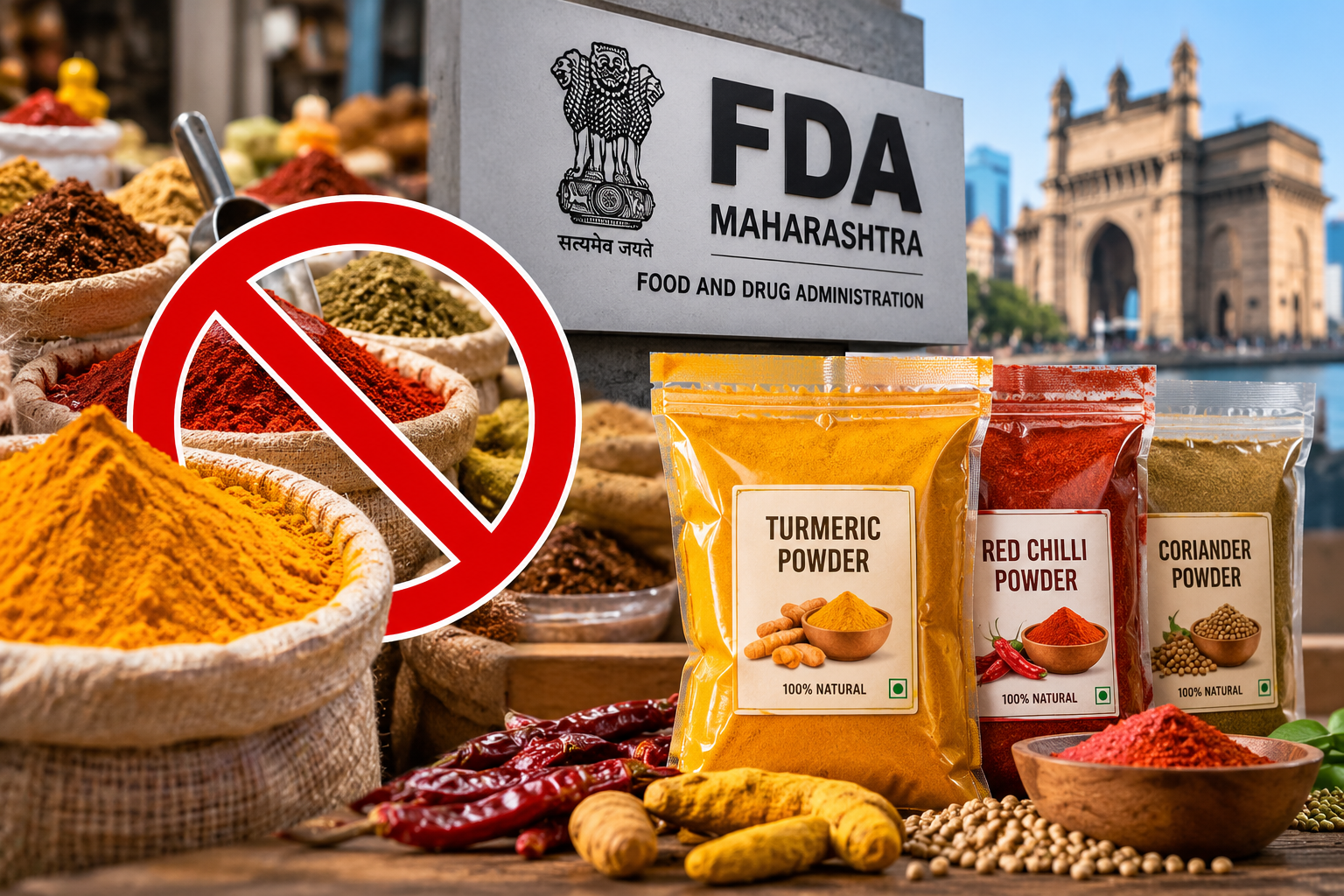
The Maharashtra Food and Drug Administration (FDA) has prohibited the sale of loose and unpackaged spice powders and mixed spices across the state as part of a crackdown on food adulteration and contamination. Under the new compliance order, spices must be packaged and sealed at the place of production to improve food safety and product traceability.
The order covers businesses involved in the manufacture, processing, storage, transportation, distribution and sale of spices. It aims to strengthen quality control and ensure that consumers receive safe and properly labelled products.
Why Has Maharashtra FDA Introduced the Restrictions?
Adulteration, unhygienic handling and misleading labelling can compromise the quality and safety of spices sold to consumers.
The FDA’s new directive seeks to make businesses more accountable for the spices they produce and sell. Packaging and sealing products at the production site can help regulators identify their source and trace them through the supply chain.
Food Safety Commissioner Tukaram Mundhe announced the action as part of the state’s broader efforts to enforce food safety standards.
Which Spices Are Covered?
The restrictions cover powdered and blended spice products, including:
- Turmeric powder
- Red chilli powder
- Coriander powder
- Cumin powder
- Black pepper powder
- Garam masala
- Curry powder
- Other mixed spice powders and spice-based products
Consumers should look for properly sealed packages with clear product and manufacturer details rather than purchasing loose powders from open containers.
Harmful Colours and Chemicals Also Under Scrutiny
The compliance order reinforces restrictions on unauthorised colours and substances that can pose health risks. These include Metanil Yellow, Rhodamine B, Sudan dyes and lead chromate.
The FDA has also prohibited the use of ethylene oxide for sterilising spices. Businesses must follow permitted food-safety and processing practices.
Who Must Follow the New Rules?
The order applies across the spice supply chain, including manufacturers, processors, packers, wholesalers, distributors, retailers and e-commerce food businesses. Hotels, restaurants, caterers and other food-service establishments handling spices are also covered by relevant compliance requirements.
Businesses must follow applicable food-safety, hygiene, packaging, labelling and licensing rules.
What Happens If Businesses Violate the Rules?
The FDA has warned of strict enforcement against violations. Depending on the nature of the offence, authorities may seize products, cancel licences and initiate legal proceedings.The action is intended to discourage adulteration and encourage food businesses to maintain proper hygiene and quality-control practices.
What Should Consumers Do?
Consumers can take a few simple precautions when buying spices:
- Choose properly sealed and labelled packets.
- Check the manufacturer’s details and applicable food licence information.
- Avoid products with damaged packaging, unusual colours or suspicious odours.
- Keep purchase receipts where possible.
- Report suspected adulteration to the appropriate food-safety authority.
In Short-Maharashtra’s new FDA order tightens the rules governing spice powders and blended masalas, making packaging and sealing at the production site mandatory. The restrictions are intended to curb adulteration, improve traceability and protect consumers. Food businesses across the state must comply with the applicable requirements.
Disclaimer: Readers should verify details through official sources. Images belong to their respective owners.