
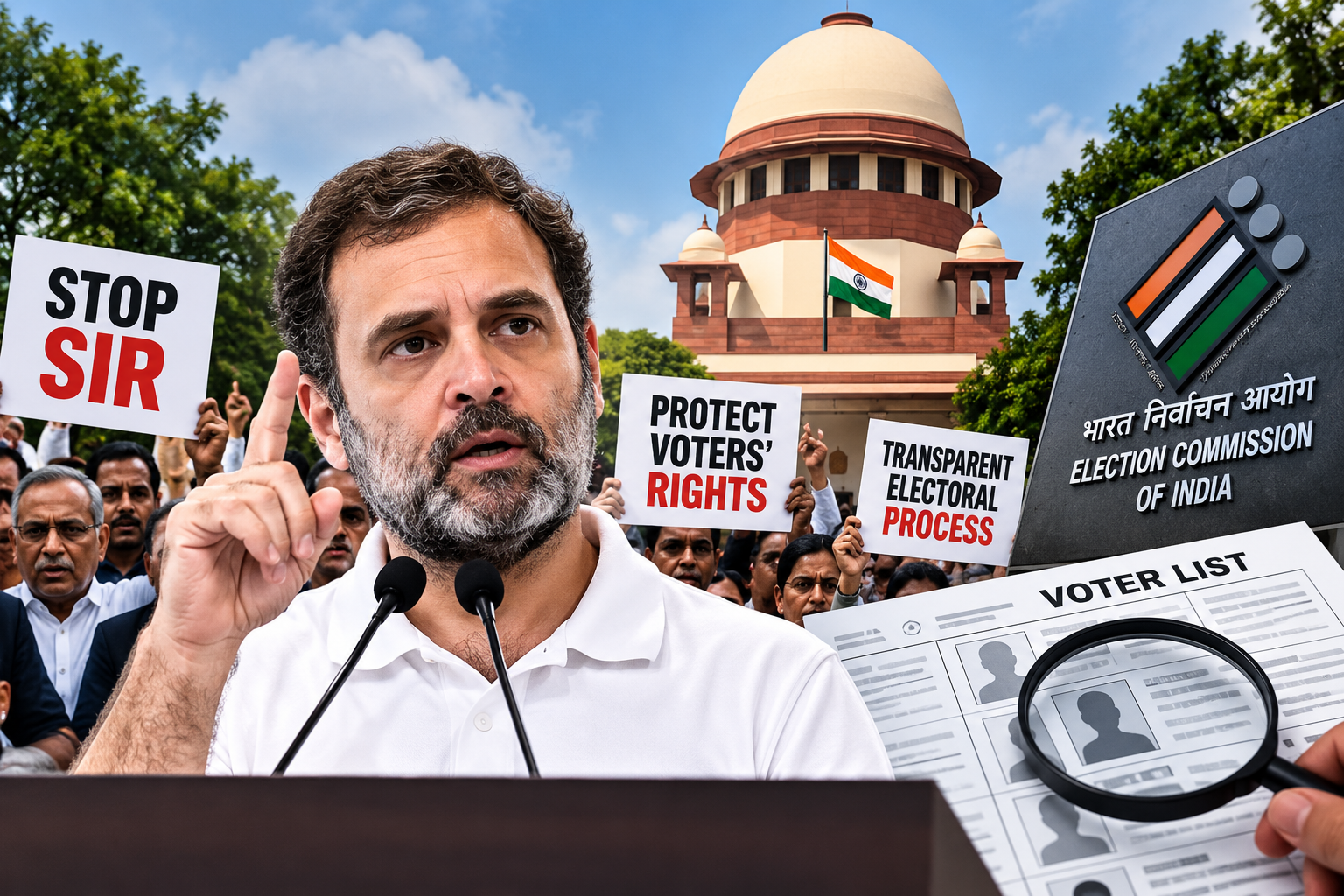
Rahul Gandhi and other INDIA bloc opposition leaders have protested against the Election Commission of India’s Special Intensive Revision (SIR) of electoral rolls. They allege that the process raises concerns about voter deletions, transparency and the protection of eligible citizens’ voting rights.
On October 12, opposition leaders marched towards the Supreme Court and filed a petition challenging aspects of the SIR process. They are seeking judicial scrutiny of the Election Commission’s procedures.
What is SIR?
SIR stands for Special Intensive Revision. It is a process used by the Election Commission to review and update electoral rolls, which contain the names of registered voters.The opposition argues that eligible voters could be wrongly excluded if the process lacks adequate safeguards, notice and opportunities to correct errors. The Election Commission’s procedures and the opposition’s allegations should be assessed separately; alleged wrongdoing is not automatically proof of electoral fraud.

What Are the Opposition’s Main Demands?
The opposition’s petition and related protests have focused on these demands:-
- Suspend the SIR process: Seek a halt to the disputed revision exercise while the legal issues are examined.
- Audit voter-list changes: Establish independent scrutiny of deletions and the systems used to manage electoral rolls.
- Protect eligible voters: Ensure that people are not removed without proper notice and a reasonable opportunity to challenge the decision.
- Make the process transparent: Require the Election Commission to disclose relevant records and provide clear information about voter deletions.
- Seek accountability: Demand the resignation or removal of Chief Election Commissioner Gyanesh Kumar, whom opposition leaders have criticised over the process.
The opposition has also raised broader demands, including a return to paper ballots and a review of certain recent elections. These are political demands, not findings that electoral fraud has been established.
Why Does This Matter?
Electoral rolls determine who is registered to vote. Errors can prevent eligible citizens from participating in elections, while inaccurate records can also undermine confidence in the electoral process.The central issue is whether voter-list revisions are conducted lawfully, transparently and with adequate safeguards for citizens.
What Happens Next?
As of October 13, 2026, news reports said the Supreme Court registry had identified procedural defects in the opposition’s petition, which had not yet been cleared for listing for a hearing. The petition’s subsequent status should be checked before publication.
The Supreme Court had separately upheld the legality of the SIR exercise challenged in the Bihar case in May 2026. That earlier ruling is distinct from the opposition’s October petition.
In short: Rahul Gandhi and the INDIA bloc are challenging aspects of the SIR voter-list revision process. They want greater transparency, independent scrutiny and safeguards against the wrongful removal of eligible voters, along with accountability from the Election Commission.